About
OLIVER HARRIS
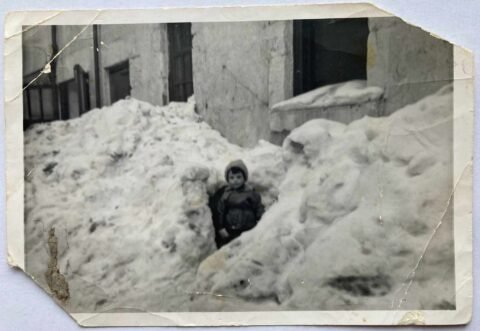
I was brought up in Buxton, Derbyshire, the highest market town in England and the only place where snow fell so deeply in the 1960s that roads in and out between November and March were often impassable. My father was a consultant physician specialising in rheumatology and I have vivid memories of him taking me around the giant dome of the Devonshire Royal Hospital (the largest unsupported dome in Europe in its day), where the Duke of Devonshire once stabled his horses. I fell in love for the first time at the nearby Palace Hotel, where Manchester United’s great team of the 1960s was staying before an FA cup semi-final (my father had been invited up to help Bobby Charlton with his knees) and I found myself sitting at a long table next to a man with mesmerising emerald-green eyes. It was George Best, and I became a football fan immediately. In retrospect, I think now this was also my original experience of fascination.
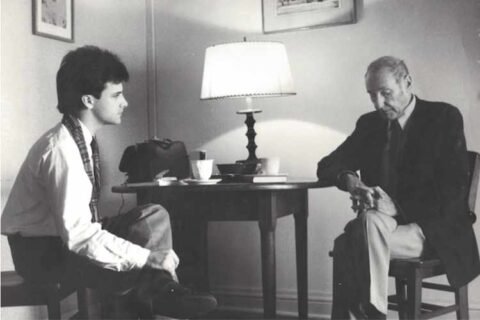
Fast forward two decades… My life as a Burroughsian began in 1984 with a PhD at Christ Church, Oxford that nobody would supervise. Burroughs was persona non grata in academia in those days—the kiss of death for a career, or so I was told, which of course made him irresistibly fascinating. I had heard of Burroughs only from hanging out with bands in the Manchester music scene of the late 1970s, where his name and tattered copies of Naked Lunch or Nova Express circulated like a secret sign for the cool cognoscenti. So, indirectly, music was my gateway drug to the hard stuff… In the 1980s I was lucky to have a girl friend with an imaginative taste in literature who encouraged my interest in Burroughs, and before I knew it, I was doing a PhD and hanging out in Kansas, asking questions of the Wizard himself.
Since then, I’ve gone on to publish some twenty books and many articles about Burroughs. Thanks to the trust placed in me by James Grauerholz, I was given the chance to put my research and scholarly fascination to the best possible use, creating a dozen new editions of his books based on their original manuscripts. That required many trips over to the US to search the archives, from Columbia in New York to Stanford in Palo Alto via Ohio and Kansas. I came to it with an idea that working on manuscripts in libraries was undoubtedly the dullest side of academia. Clearly, I had no idea what was involved, or what I was even looking for, but then nobody had really ever done archival work on Burroughs. It was exhilarating, to be making discoveries that would change what we knew about his work and change the work itself. And it was overwhelming, to be submerged in a vortex of cut-up typescripts, wondering if I was finally getting it or losing my mind entirely… I cheated every now and then—researching Hemingway in the JFK Library at Boston, writing essays about Kerouac and Ginsberg and film noir—but, as decades passed and marriages came and went, I always came back to Burroughs. Some professors of literature suffer Impostor Syndrome; but I actually was an imposter, my university post little more than an alibi to pursue my fascination.
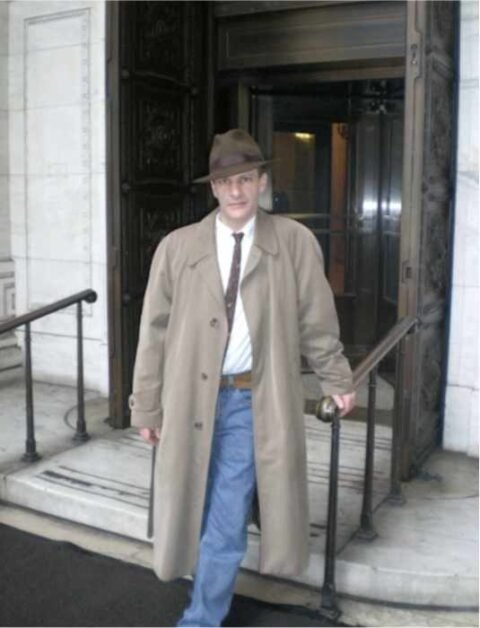
My Day Job from 1993 onwards was teaching American Literature at Keele University, where, until I took early retirement in 2024, I was allowed to run courses about the Beats, the counterculture, and some of my other fascinations, including 1940s Hitchcock movies. But I only ever wanted one foot in academia, and in 2009 I helped organise the NL@50 events in Paris to mark the half-century of Burroughs’ landmark novel. Its success in mixing up critical and creative work led in 2010 to becoming the founding President of the European Beat Studies Network, which is dedicated to mixing things up and bringing people together. It gave me the opportunity to organise conferences in Tangier (another of my fascinations), Manchester, and Paris. What goes for my Burroughs books, goes for the EBSN, too: not work, more a labour of love.
Love: I don’t want to respect their privacy so completely that I fail to recognise what I have learned—about myself and my work—from the wives and partners I have loved and lost in my life. The most important lessons have often been the most painful, it goes without saying.
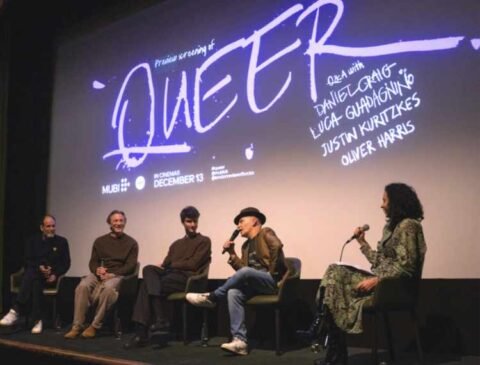
Like everyone, I’ve been through times of trial and trauma, when only the love of my four children has seen me through. But I’ve also been sustained by the extraordinary privilege of being able to work on William Burroughs, and through him to have known and worked with many wonderful people—most recently, the Italian artist Elia Inderle and the Iranian writer Farid Ghadami. It was a special kick to be introduced in 2014 on a Burroughs Centenary radio show by Iggy Pop (“Now I’ve met William Burroughs once, and have been inspired by him, but I am not an expert on Burroughs, unlike this guy…”) and likewise to be able to advise Daniel Craig and Luca Guadagnino on their beautiful film adaptation of Queer. Burroughs, you might say, has been my gateway drug to the world.
After forty years in the game, I have found myself reflecting more and more on what it means to follow in a writer’s footsteps, and the result has been a series of hybrid books, combining scholarship with personal memoir and a detective fiction narrative—Two Assassins: William Burroughs/Hassan Sabbah (2023) and One Shot: A Beat Generation Mystery (2024). In a sense, they’re performative versions of what I had understood in William Burroughs and the Secret of Fascination 20 years earlier—that the secret of fascination is the fascination of the secret. It’s the secret that mirrors back our blind spots and opens our eyes to the world…