Fascination
OLIVER HARRIS
I forget exactly where or when it was. Somewhere in France on a family holiday in the 1990s, I think. A deep cave. Very dark. There was a tour guide. Et voilà, she said, gesturing dramatically, La Beem! My French vocabulary has some gaps, and I wondered what La Beem could be as I stepped forward into the darkness. It was only when I found myself suddenly on the very brink of an utterly depthless void, staring into a vertiginous blackness that I realized she meant l’abîme… the abyss…
My conscious interest in fascination, my awareness of it as a thing, probably didn’t start until the late 1990s, and the first object of fascination that drew me in was film noir. I never trained in Film Studies (I am not sure I ever “trained” in Literary Studies either, for that matter…), and although I went on to teach film at university level for 20 years it was always as an amateur, in the literal sense of the word: someone with a passion for it, rather than someone who thought they knew what they were doing. My love of noir films of the 1940s and 1950s was nothing out of the ordinary; it wasn’t sophisticated or recherché in the way that loving Korean or Latin American cinema would have been. Nor was I much of a connoisseur: for my 21st birthday, I held a screening of Kiss Me Deadly, a familiar classic, not Ascenseur pour l’échafaud (it would be years before I got to know Louis Malle’s great film, with Jeanne Moreau and a Miles Davis soundtrack). It was nothing special until, at the end of the 1990s, I began supervising a PhD in Lille that led to an invitation to write something about film for the French university’s annual essay collection, Les Cahiers du CIRCAV. (The PhD in Lille was, of course, about Burroughs, on whom I have majored in fascination). Being a Francophile, to be published in French was too tasty an invite to turn down. So “Film noir et le royaume nocturne de la fascination” preceded my first English-language publication on the subject, “Film Noir Fascination: Outside History but Historically So,” which appeared in the blue-chip Cinema Journal in 2003.
But why “fascination” in the first place? What made me realise I even was fascinated by film noir? It was as simple as noticing that, in pretty much everything ever written about these films, critics called them fascinating—but they never defined the term. They made no distinction between “fascinating” and “very interesting.” What was the difference? For that, I turned to one of the great philosophers of fascination, Maurice Blanchot, whose prose style, with its endlessly elusive and repetitious patterns, effectively performs the enigmatic appeal, the inscrutable dark desire of fascination itself. Although impenetrable as ideas, Blanchot’s words helped me recognize that the star of film noir was not the femme fatale but l’homme fasciné… the man who cannot look away and yet cannot see what he sees. Think Burt Lancaster captivated by Ava Gardner in the greatest of all the noirs, The Killers …
Meanwhile, having started my academic career in 1993, I knew I had to publish what is called a monograph, a term that always sounded so dull in my ears. The obvious thing to do was rehash the PhD I had finished at Oxford in 1988 (“The Last Words of William Burroughs”), but that, too, was dull: indeed, I had been told to make it dull as the only way to get a thesis about someone as undesirable in academia as Burroughs through the system and out the other side. Normally, anyone who completes a PhD gets it published as quickly as possible, often by a low-quality academic press, sometimes a good university press, just so that it’s on their CV to help get a job. But in 1988 I didn’t want a job. I had just been given a handsome contract to edit the letters of William Burroughs and I was looking forward to a life of ease, working as a freelance editor in a room lined with Persian rugs and Moroccan lamps, incense-sticks burning as I wrote late into the night… So, when Cambridge University Press offered me £1,000 to publish my thesis, I turned them down. (When I recently shared this anecdote from almost 40 years ago with my current editor at CUP, he howled, in either disbelief or despair.)
The point is that I hesitated to rehash the research that had gone into my PhD because now it struck me that the thesis wasn’t simply dull in the way it was written: what it lacked was the feel of experience, the feel of the life I had lived to write it and the allure of pursuing Burroughs in the first place. It lacked the performative dimension I recognized in Blanchot, which conveyed the sense of trying to engage with something deeply ambiguous, something utterly irresistible and yet endlessly elusive—which is a fair definition of fascination. This only made sense to me having spent two decades researching and writing about Burroughs. For the longest time, I had simply ignored people when they would ask, “So, are you still working on Burroughs?”—but now I understood that, from the outside, there seemed to be something excessive about “still working on Burroughs…” It had always seemed entirely reasonable to me. Working on Burroughs was interesting and entirely “pragmatic” (a word my English teacher at school had once applied to me: I knew it was an insult). Now I was beginning to see the paradox: the more I looked and the closer I came to it, the larger my blind spot became—the field of vision that was dark to me for reasons of which I had to remain unaware, a secret inside. And it was this encounter with myself in the mirror that led to William Burroughs and the Secret of Fascination in 2003—which turned out to be not the end of it, but just one more baby step into the abyss…
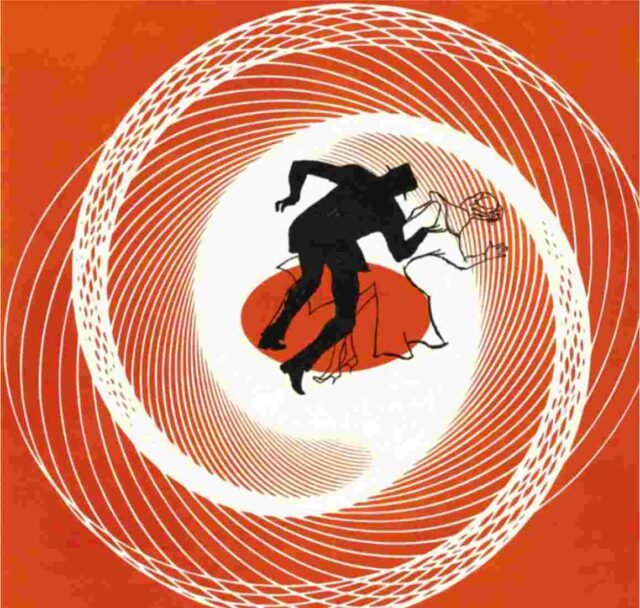
After a while, I found myself identified with Fascination Studies and was invited to contribute to a Special Issue of the excellent online journal Postmodern Culture, on “Fascination and Cinema,” which came out in 2020. For personal reasons, the timing didn’t work out for me, but in retrospect it was maybe just as well. I had planned to write about the films of Alfred Hitchcock, and the problem was I had plenty to say about Saboteur—widely recognized as one of Hitchcock’s worst and least fascinating films—and nothing new at all to say about Vertigo, his classic study of fascination. Was I actually fascinated by Hitchcock, or just very interested? I wasn’t sure. Maybe I was forcing the issue… If I didn’t feel fascinated, could it be real? It reminded me of the paradox at the heart of fascination, or at least of my fascination: the fascinations of other people, even of those dear to me, leave me cold. I can see that their passions for Christopher Marlowe or James Baldwin take them to interesting places but instead of sharing it, I didn’t believe them—or rather, they made me doubt myself. Could it be that they felt it and I didn’t, that I was faking my fascination? Or was this anxiety just one more turn of the screw, one more spiral of the vertigo that makes fascination something categorially other, something far darker and deeper, than “very interesting”…